Skip to content


🏠 What Is a Home Appraisal and Why It Matters

Before we dive into specifics, let’s lay the foundation. A home appraisal is an unbiased estimate of your home’s market value, typically conducted by a licensed appraiser. It’s usually ordered by the buyer’s lender during the home-buying process to ensure the loan amount aligns with the property’s value.
Why Appraisals Matter:
- Lenders won’t finance more than a home is worth.
- A low appraisal can force price renegotiations—or kill the deal.
- A high appraisal can increase seller leverage and buyer equity.
Understanding the home appraisal process helps sellers prepare strategically and avoid common pitfalls.
⚠️What Hurts a Home Appraisal? (Common Issues to Avoid)

One of the biggest frustrations for homeowners is discovering what hurts a home appraisal—especially when the issues seem minor. Here’s what to look out for:
- Peeling paint, cracked tiles, outdated fixtures, or visible damage.
- Deferred maintenance like leaky faucets, worn carpets, or missing siding.
💡 Real-life tip: One seller in Southern Maryland lost $8,000 on their appraised value simply because of a neglected roof and unkept landscaping.
These are among the most scrutinized areas of any home. Appraisers notice outdated countertops, original appliances, and lack of modern features.
If you’ve added a sunroom or finished the basement without permits, it may not count toward the appraisal—no matter how beautiful.
Even if your home is in great shape, falling comps (comparable sales) in the neighborhood can drag your value down.
Yes, appearances matter. Cluttered, smelly, or unkempt homes can subconsciously influence how appraisers evaluate condition—even if they try to stay objective.
These are just a few common home appraisal issues that can hurt your value, many of which are preventable with a little preparation.
🌟 How to Increase Home Appraisal: Smart Seller Strategies
 Want to know how to get a higher home appraisal? It’s not just about luck—it’s about preparation. Here are the most effective steps you can take:
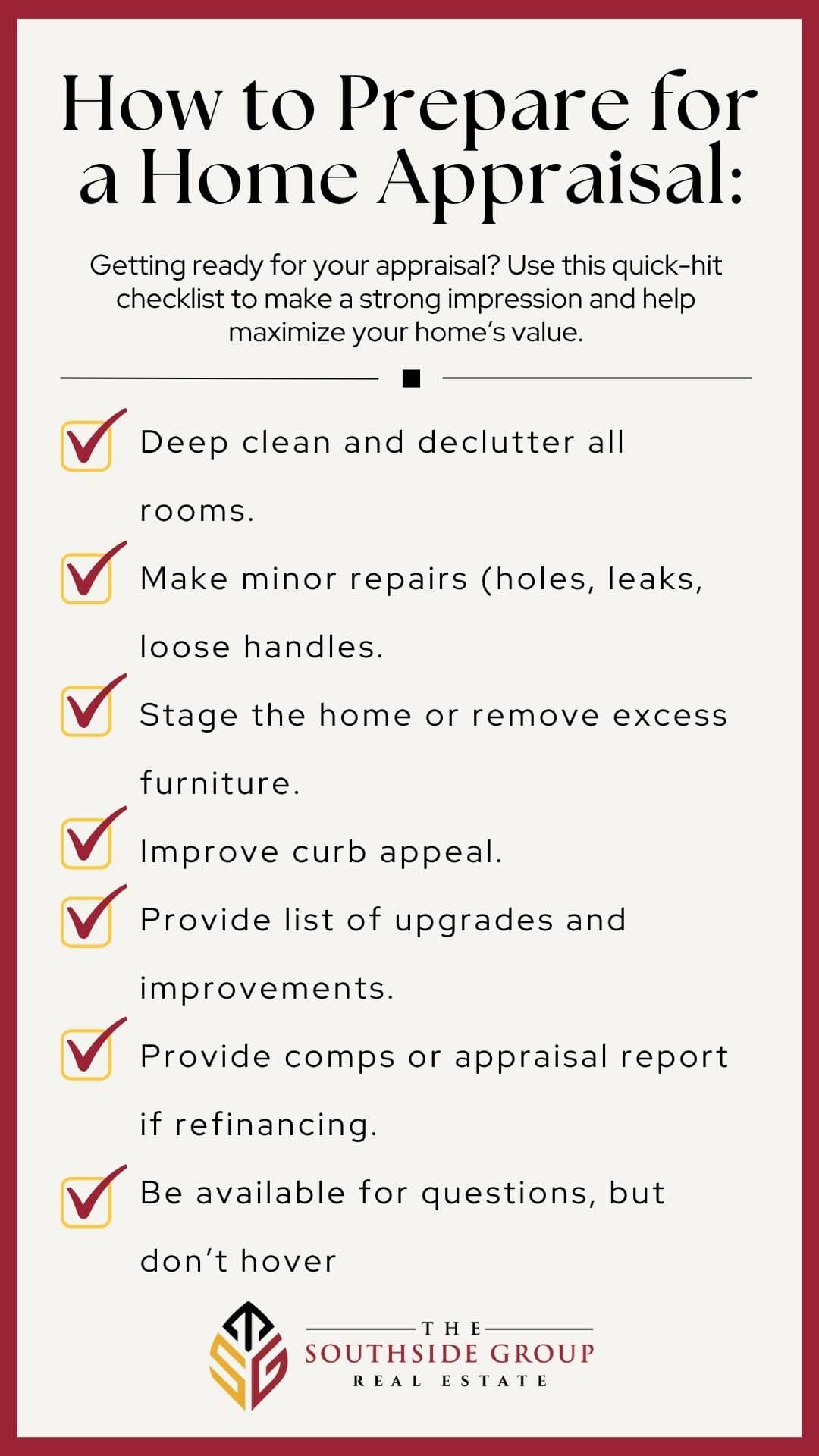
First impressions count. Clean, declutter, and deodorize your home. Freshen up paint, steam clean carpets, and stage the space with simple touches.
Fix leaky faucets, cracked drywall, broken locks, or squeaky doors. These small fixes can make a big difference in perceived condition.
-
-
- Focus on kitchens, bathrooms, and flooring.
- Even minor updates like new cabinet hardware, light fixtures, or a backsplash can elevate value.
-
Don’t forget the outside. Mow the lawn, mulch the beds, and trim overgrown bushes. Power-wash walkways or siding for a fresh, clean look.
Compile a list of recent updates: roof replacement, new HVAC, water heater, septic system, etc. Include receipts, dates, and warranty details.
📍 Local Factors That Impact Home Appraisal Value

Appraisers rely heavily on comparable sales in your area. That means what’s happening locally plays a massive role in determining your home’s worth.
Key Local Variables:
-
- Nearby home sales (especially within 1 mile)
- School district ratings
- Access to highways, public transportation, or employers
- Local inventory and buyer demand
If you’re in a growing community like Hollywood, MD or Southern Maryland, recent commercial development, waterfront access, or proximity to military bases can increase your value.
🧭 Real Estate Appraisal Tips for Sellers

Working with an experienced real estate agent can make a significant difference in how smoothly your appraisal goes.
Your Agent Can:
-
- Recommend repairs or upgrades before the appraiser visits
- Help you price your home strategically
- Provide their own list of recent comps for the appraiser
- Advocate if your appraisal comes in unexpectedly low
A great agent ensures you’re not left scrambling after the fact—they help you prepare before it counts.