
 Skip to content
Simple Definitions for Home Buyers, Sellers & Investors
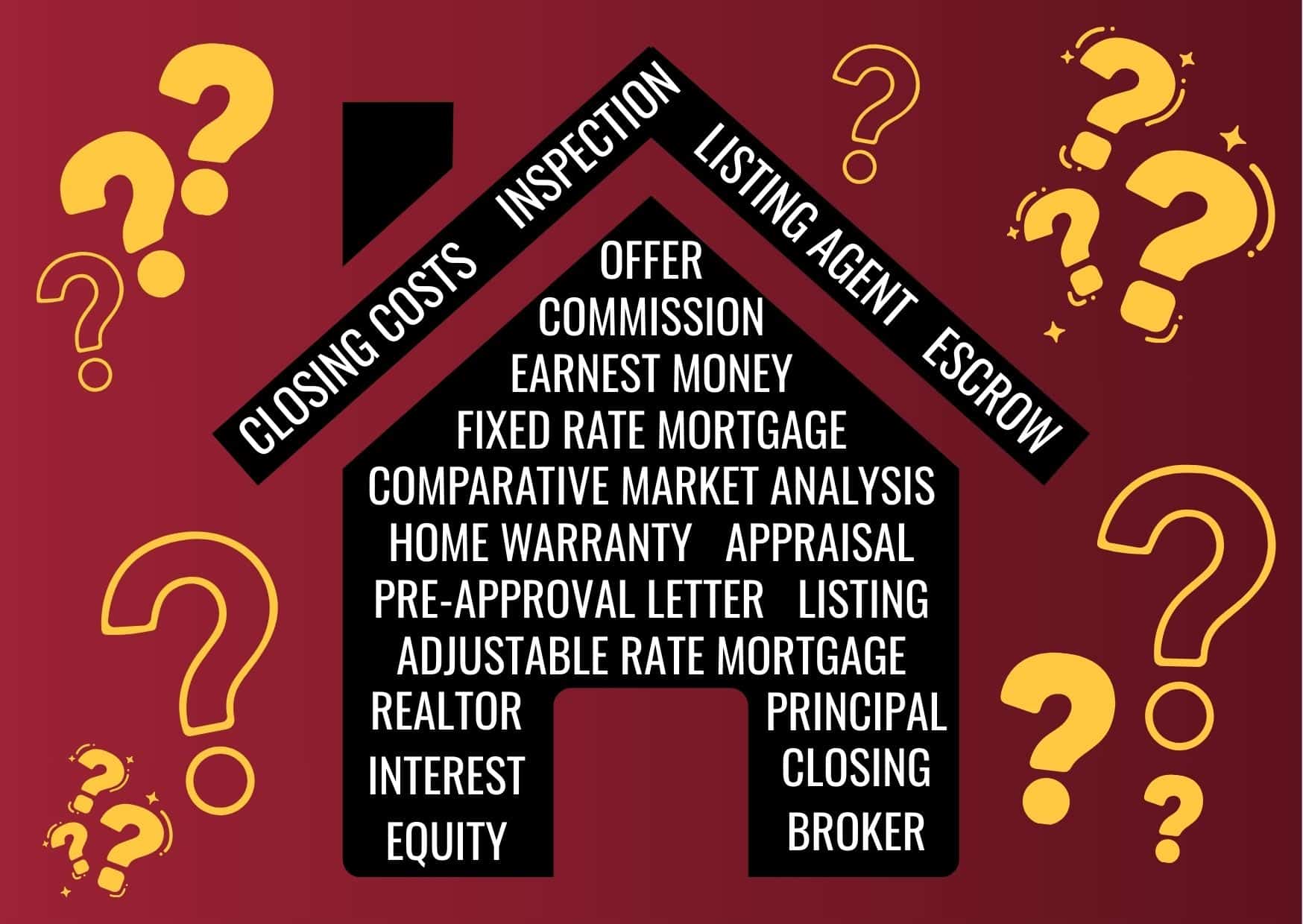
Understanding financial and real estate terms is essential when buying, selling, or investing in a home. This Financial Terms Glossary provides clear, easy-to-understand definitions to help beginners, buyers, sellers, and investors make confident decisions throughout the real estate process.
👉 If you have questions about any of these terms or how they apply to buying or selling a home in Maryland, our team is here to help.
📘 Adjustable-Rate Mortgage (ARM)
A mortgage where the interest rate can change over time. It usually starts lower and adjusts based on market conditions, which can increase or decrease monthly payments.
📘 Adjustment Date
The date when an ARM’s interest rate may change.
📘 Adjustment Period
The length of time between interest rate changes on an adjustable-rate mortgage.
📘 Amortization
The process of paying off a loan over time through regular payments that include interest and principal.
📘 Amortization Term
The total amount of time needed to fully repay a loan, such as 30 years (360 months).
📘 Annual Percentage Rate (APR)
The true yearly cost of a loan, including interest and certain fees, used to compare loan options.
📘 Appreciation
An increase in a property’s value due to market demand, location, or improvements.
📘 Asset
Anything you own that has financial value, such as a home, savings, or investments.
📘 Assignment
The transfer of a mortgage or loan from one lender or party to another.
📘 Assumable Mortgage
A loan that allows a buyer to take over the seller’s existing mortgage terms.
📘 Assumption
When a buyer agrees to take responsibility for the seller’s mortgage.
📘 Assumption Clause
A section of a loan agreement explaining whether the mortgage can be assumed.
📘 Assumption Fee
A lender fee charged when a mortgage is transferred to a new borrower.
📘 Balance Sheet
A financial snapshot showing assets, debts, and net worth.
📘 Balloon Mortgage
A mortgage with smaller payments that ends with a large final payment.
📘 Balloon Payment
The large lump-sum payment due at the end of a balloon mortgage.
📘 Basis Point
One one-hundredth of a percent (0.01%), often used to describe interest rate changes.
📘 Binder
A temporary agreement showing intent to purchase a property, usually with earnest money.
📘 Biweekly Payment Mortgage
A mortgage paid every two weeks, helping reduce interest and shorten loan length.
📘 Blanket Mortgage
One mortgage that covers multiple properties.
📘 Breach
Failure to meet the terms of a legal agreement.
📘 Bridge Loan
A short-term loan used to buy a new home before selling the current one.
📘 Broker
A licensed professional who helps arrange real estate or loan transactions.
📘 Buydown Mortgage
A mortgage where upfront payments reduce the interest rate temporarily or permanently.
📘 Call Option
A loan clause allowing the lender to require full repayment after a certain time.
📘 Cap
A limit on how much an adjustable-rate mortgage can increase or decrease.
📘 Capital Improvement
A permanent upgrade that increases property value, such as a new roof or addition.
📘 Cash-Out Refinance
Refinancing for more than you owe and receiving the extra money as cash.
📘 Certificate of Deposit (CD)
A savings account with a fixed interest rate for a set period of time.
📘 Certificate of Eligibility
A document confirming a veteran qualifies for a VA loan.
📘 Certificate of Title
A document showing legal ownership of a property.
📘 Chain of Title
The history of ownership transfers for a property.
📘 Clear Title
Property ownership free of liens or legal disputes.
📘 Closing
The final step where documents are signed and ownership transfers.
📘 Closing Costs
Fees paid at closing for services like loan processing, title work, and taxes.
📘 Collateral
An asset used to secure a loan, such as a home.
📘 Commission
Payment to a real estate agent or broker, usually a percentage of the sale price.
📘 Contingency
A condition that must be met before a contract becomes final.
📘 Conventional Mortgage
A home loan not backed by a government agency.
📘 Convertible ARM
An adjustable-rate mortgage that can change into a fixed-rate loan.
📘 Cooperative (Co-op)
Housing where residents own shares in a corporation rather than individual units.
📘 Deed
The legal document transferring property ownership.
📘 Deed in Lieu
Giving property to a lender to avoid foreclosure.
📘 Deed of Trust
A document used in some states instead of a mortgage.
📘 Default
Failure to make loan payments as agreed.
📘 Delinquency
Late or missed mortgage payments.
📘 Depreciation
A decrease in property value.
📘 Due-on-Sale Provision
A clause requiring full loan repayment if the property is sold.
📘 Earnest Money Deposit
Money showing a buyer’s serious intent to purchase a home.
📘 Easement
The legal right to use part of another person’s property.
📘 Encumbrance
Any claim or restriction affecting property ownership.
📘 Equity
The difference between a home’s value and the amount owed.
📘 Escrow
Money held by a third party until conditions are met.
📘 Eviction
The legal removal of a tenant from a property.
📘 Fair Market Value
The price a willing buyer and seller agree on.
📘 Fee Simple
The highest form of property ownership.
📘 FHA Loan
A government-insured mortgage with flexible qualification rules.
📘 Fixed-Rate Mortgage
A loan with an interest rate that stays the same.
📘 Flood Insurance
Insurance covering damage caused by flooding.
📘 Foreclosure
The legal process where a lender takes ownership after default.
📘 Good Faith Estimate
An estimate of loan-related costs given to borrowers.
📘 Hazard Insurance
Insurance covering damage from fire, storms, or vandalism.
📘 Home Equity Line of Credit (HELOC)
A revolving credit line secured by home equity.
📘 Home Equity Loan
A lump-sum loan secured by a home’s equity.
📘 Housing Ratio
The percentage of income spent on housing expenses.
📘 HUD
The U.S. Department of Housing and Urban Development.
📘 Index
A rate used to calculate interest changes on ARMs.
📘 Impound Account
An account holding funds for taxes and insurance.
📘 Interest-Only Loan
A loan where early payments cover only interest.
📘 Jumbo Loan
A mortgage that exceeds standard loan limits.
📘 Kick-Out Clause
Allows a seller to continue marketing a property and “kick out” a buyer if a better offer comes in (often with contingencies)
📘 Key Rate
A benchmark interest rate used by lenders to set loan pricing
📘 Lien
A legal claim against a property for unpaid debt.
📘 Lender
The bank or company providing the loan.
📘 LIBOR
An international interest rate benchmark.
📘 Loan-to-Value Ratio (LTV)
The loan amount compared to the property’s value.
📘 Lock-In Period
The time a lender guarantees an interest rate.
📘 Margin
The amount added to an index to determine ARM rates.
📘 Maturity Date
The date a loan or investment must be repaid or accessed.
📘 Mortgage
A loan used to purchase real estate.
📘 Mortgage Insurance (MI)
Insurance protecting lenders if a borrower defaults.
📘 Negative Amortization
When loan payments don’t cover interest, increasing the balance.
📘 Non-Conforming Loan
A loan that doesn’t meet standard guidelines.
📘 Origination Fee
A lender fee for processing a loan.
📘 Owner Financing
When the seller provides financing to the buyer.
📘 Periodic Cap
Limits how much ARM rates can change per period.
📘 PITI
Principal, interest, taxes, and insurance.
📘 Points
Fees paid to reduce a mortgage interest rate.
📘 Prepayment Penalty
A fee for paying off a loan early.
📘 Private Mortgage Insurance (PMI)
Insurance required for low down payment loans.
📘 Qualifying Ratios
Ratios lenders use to determine how much you can borrow.
📘 Rate Lock-In
A written agreement guaranteeing an interest rate.
📘 Refinancing
Replacing an existing loan with a new one.
📘 REO
Property owned by a lender after foreclosure.
📘 Seller Carry Back
When the seller finances part of the purchase.
📘 Simple Interest
Interest calculated only on the original amount.
📘 Survey
A map showing property boundaries and structures.
📘 Tenants in Common
Shared ownership without survivorship rights.
📘 Title Insurance
Insurance protecting against ownership disputes.
📘 Title Search
A review of property ownership history.
📘 Total Debt Ratio
Debt payments divided by income.
📘 Underwriting
The lender’s process of reviewing income, credit, assets, and the property to approve a loan
📘 Upfront Costs
Initial expenses paid by the buyer, such as earnest money, appraisal, and inspection fees
📘 Upfront Mortgage Insurance Premium (UFMIP)
A one-time mortgage insurance fee required for FHA loans
📘 Unsecured Loan
A loan not backed by collateral (rare for real estate purchases but sometimes used for repairs or down payments)
📘 Usury
Charging interest at a rate higher than legally allowed
📘 Variable Rate
An interest rate that can change over time.
Don’t have an account?Sign up!